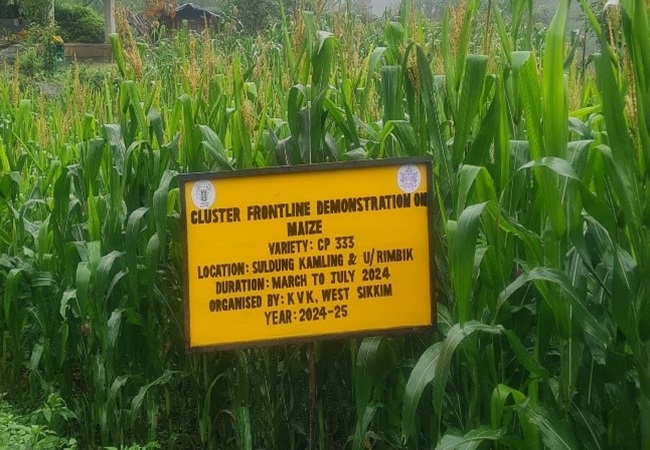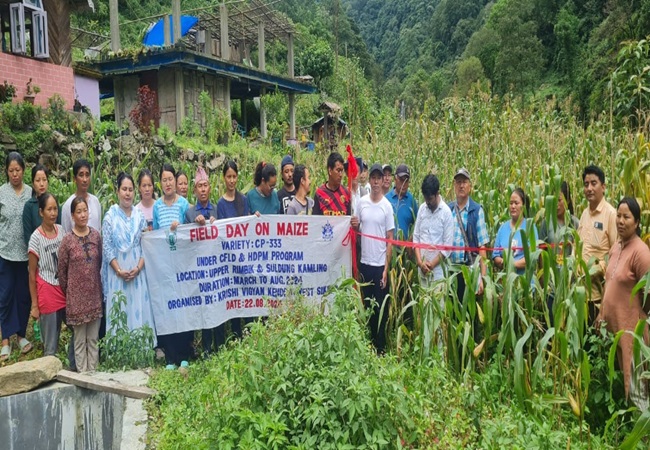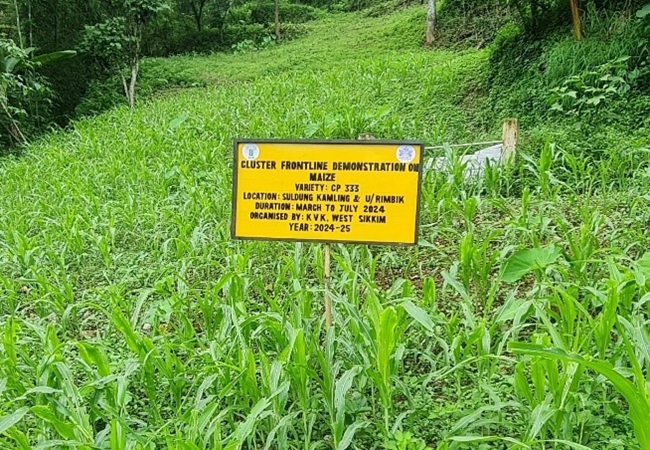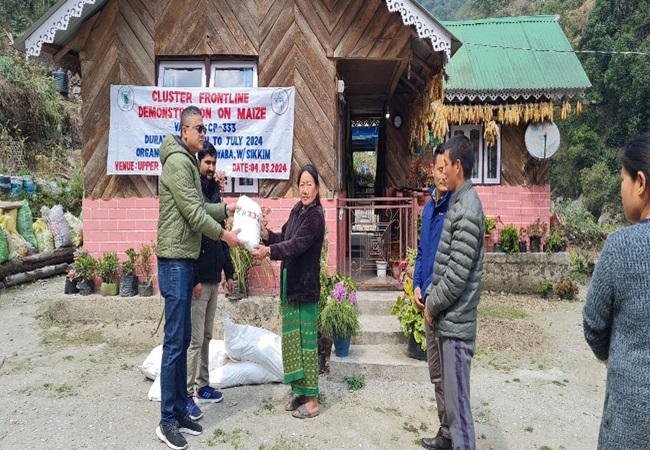
Name of the Project: Cluster Frontline Demonstration on Maize
1. Rationality:
The maize produced in India is primarily utilized for poultry (47%) and animal (13%) feed. Secondly, maize is the most common raw material in the starch industry. Maize starch has wide utility in food, paper, pharmaceutical, textile industries. It can also be used for production of bioplastics, a way to address the issue of plastic pollution. A steady supply of maize will open up the avenues of employment generation. In addition to this, nearly 10 lakh tonnes of maize is consumed in the processed food industry to prepare snacks, breakfast cereals, and pet foods. Maize is also being used for silage production and fodder purposes. This project aims to enhance maize production in North East India, leveraging the crop's significance in food security, animal feed, and industrial applications. Given that maize is the third most important crop in India after wheat and rice, its potential to improve agricultural sustainability and economic viability is substantial. In terms of sustainability, maize requires significantly less water compared to rice and sugarcane approximately one-third and one-fourth respectively. These characteristic positions maize as an environmentally friendly alternative that can help mitigate water scarcity leading to more sustainable agricultural systems while maximizing productivity. Despite its importance, maize productivity varies significantly across regions. By addressing technological gaps and fostering collaboration among stakeholders, this initiative has the potential to transform maize cultivation in India into a more productive and sustainable endeavor. This project will primarily focus on implementing key technologies to enhance maize productivity. These technologies include the introduction of high-yielding hybrids/varieties, seed treatment, strategic sowing practices, integrated nutrient management, integrated pest management, targeted management of fall army worm, integrated weed management, as well as improved harvesting and drying techniques. Through the successful implementation of these technologies and practices, the aim will be to significantly reduce yield gaps (Yield Gap-1 and II) in maize cultivation. By promoting the adoption of potential resource conservation technologies (RCTs) in integration with intensification technologies, the untapped potential for higher productivity at the farmer level can be unlocked. The collaborative efforts of KVKs, ICAR institutes, line departments will be instrumental in wider adoption of demonstrated technologies in closing the yield gaps and enhancing maize productivity within the regions. The concerted effort will be akin to a mission mode approach, strategically addressing the challenges in maize production. To fully realize the untapped yield, active participation from multiple stakeholders is essential. Establishing forward and backward linkages, complemented by technology and policy support, will play a pivotal role in achieving success. This collaborative effort is crucial to demonstrating effective production models that can positively impact maize cultivation and address production challenges.
2. Objective:
- Demonstrate best integrated crop management (ICM) options in maize for productivity and income enhancement in participatory mode.
- To augment production and post-harvest skill sets of farmers and other stakeholders through capacity development.
- To implement targeted technological interventions and extension activities at wider scale for horizontal and vertical expansion in traditional and non-traditional growing areas.
3. Achievements:
4. State-wise Achievement of CFLD Oilseed during 2023-24:
| State | KVK | Allotted Area | Achieved Area | ||
|---|---|---|---|---|---|
| Area (ha) | No. of Demonstration | Area (ha) | No. of Demonstration | ||
| Arunachal Pradesh | Changlang | 10 | 25 | 10 | 25 |
| Upper Subansiri | 20 | 50 | 20 | 50 | |
| Sikkim | West Sikkim | 15 | 37 | 15 | 37 |
| North Sikkim | 30 | 75 | 30 | 75 | |
5. Good Quality Photographs